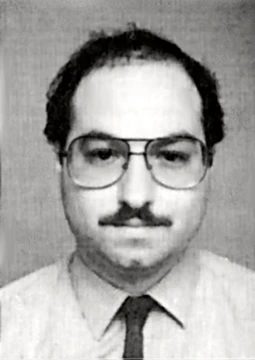
Markus Wolf
East German spymaster who ran foreign intelligence for 34 years.

Wikipedia / Wikimedia Commons
Markus Johannes Wolf (19 January 1923 – 9 November 2006), nicknamed Mischa, ran the Main Directorate for Reconnaissance, the foreign intelligence arm of East Germany's Stasi. For 34 years—nearly the entire Cold War—he was a senior figure in the Stasi, though not formally its second-highest ranking official (that distinction belonged to Erich Mielke, the Stasi's overall head). Wolf is widely considered one of the Cold War's most capable spymasters. Western intelligence agencies reportedly had no idea what he looked like until 1978, earning him the nickname "the man without a face."
Wolf was born in Hechingen, in what is now Baden-Württemberg, to a German-Jewish father and a non-Jewish German mother. His father, Friedrich Wolf, was a writer, communist activist, and physician; his mother, Else Wolf, was a nursery teacher. He had one brother, film director Konrad Wolf. After the Nazi Party came to power in 1933, the family fled to Moscow via Switzerland and France, driven by their communist beliefs and Friedrich Wolf's Jewish heritage. In exile, Wolf attended the German Karl Liebknecht School and later a Russian school. At 13, in 1936, he obtained Soviet identity documents. He held citizenship in Germany, the Soviet Union, and eventually East Germany.
After finishing school in 1940, Wolf entered the Moscow Institute of Airplane Engineering, which was evacuated to Alma Ata following the Nazi invasion of the USSR. In 1942, he was directed to join the Comintern, where he was trained for covert work behind enemy lines. From 1943 to 1945, after the Comintern dissolved, he worked as a newsreader for German People's Radio. After the war, Wolf was sent to Berlin with the Ulbricht Group, led by Walter Ulbricht, to work as a journalist for a radio station in the Soviet occupation zone. He was among the journalists who observed the entire Nuremberg trials. From 1949 to 1951, he served at the GDR embassy in the USSR, and in 1951 he joined the Stasi.
On 1 December 1952, at age 29, Ulbricht appointed Wolf director of the Institute for Economic Research, the foreign intelligence service within the Stasi. This agency, which Wolf took over from his mentor Anton Ackermann, became known as the Main Directorate for Reconnaissance. As intelligence chief, Wolf had major success infiltrating West German government, political, and business circles. His most famous agent was Günter G
- known_for
- Head of East German foreign intelligence (HVA), not formally second-in-command of the Stasi; 'the man without a face' until 1978
Lore & Background
Wolf was born to a German-Jewish father and non-Jewish German mother; his father was a communist activist. After the Nazi Party gained power in 1933, Wolf emigrated to Moscow with his father. He attended school in exile, obtained Soviet identity documents at age 13, and later studied at the Moscow Institute of Airplane Engineering. During World War II, he joined the Comintern and worked as a newsreader for German People's Radio.
After the war, Wolf was sent to Berlin with the Ulbricht Group and worked as a journalist. He observed the Nuremberg trials. In 1952, at age 29, he was appointed director of the Institute for Economic Research, which became the Main Directorate for Reconnaissance (HVA). He achieved great success penetrating West German government and business circles, most notably through spy Günter Guillaume, whose exposure led to Chancellor Willy Brandt's resignation in 1974.
Wolf did not speak at the 1989 Alexanderplatz demonstration.
Reader's Guide
Markus Wolf's significance lies in his long tenure as head of East Germany's foreign intelligence service, the HVA, which he built into one of the Cold War's most effective spy agencies. His success in penetrating West Germany's highest political circles, including the chancellor's office, demonstrated the reach of East German espionage. Wolf's elusiveness—earning him the nickname 'the man without a face'—became legendary, though his identity was eventually uncovered in 1978. His legacy is also marked by the Stasi's support for international terrorism, including training and safe havens for groups such as the PLO and the Red Army Faction, as well as direct involvement with figures like Carlos the Jackal. After the Cold War, Wolf faced legal consequences in unified Germany, but his convictions were partially overturned, reflecting the complex legal status of former East German officials. His life encapsulates the shadowy world of Cold War intelligence and the moral ambiguities of state security.
Did You Know?
- Wolf was known as 'the man without a face' because Western agencies reportedly did not know what he looked like until 1978.
- His spy Günter Guillaume was secretary to West German Chancellor Willy Brandt, and his exposure led to Brandt's resignation in 1974.
- Wolf's Stasi trained the security brigade of the Palestinian Liberation Organization and provided safe havens for the Red Army Faction.
- After German reunification, Wolf was convicted of treason, but the conviction was later quashed because West Germany was a separate country at the time.
More in Figures Of Infamy And Espionage 1-22
Spotted an error? Know more?
This is a living reference — every entry is fact-audited, and reader corrections feed straight into our audit queue. Suggest an edit · See this site's audit record