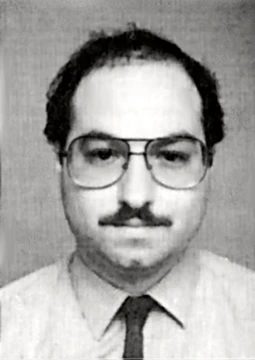
Matsutarō Shōriki
Media magnate, baseball pioneer, and nuclear power advocate.

Wikipedia / Wikimedia Commons
Matsutarō Shōriki (11 April 1885 – 9 October 1969) was a Japanese media owner and politician. He bought the failing Yomiuri Shimbun, turned it into a top Tokyo newspaper, created the Yomiuri Giants baseball club, and launched Japan’s first commercial TV station, Nippon Television Network. Later, he pushed strongly for nuclear energy in the country.
Born in Daimon, Toyama, Shōriki studied law at Tokyo Imperial University, where he also competed in judo. He became a highly skilled judoka, posthumously awarded the rare 10th dan. After graduating in 1913, he joined the Home Ministry and worked his way up at the Tokyo Metropolitan Police Department. As chief secretary, he helped crack down on the Japanese Communist Party in June 1923. Following the Toranomon Incident—an assassination attempt on Crown Prince Hirohito in December 1923—Shōriki resigned, taking responsibility alongside the police superintendent general. Though later cleared by amnesty, he never returned to public service.
In 1924, with financial backing from Home Minister Viscount Shinpei Gotō, Shōriki bought the bankrupt Yomiuri Shimbun and became its president. He revamped the paper with better news coverage and a full-page radio schedule, focusing on broad Tokyo-area readership. By 1941, it had the largest circulation of any daily in the Tokyo region.
Shōriki is called the father of Japanese professional baseball. In 1934, he organized a Japanese all-star team to play against an American all-star squad. Unlike earlier Japanese teams that disbanded, this one turned professional, eventually becoming the Yomiuri Giants. He survived a broadsword attack by a right-wing nationalist angry about Americans playing in Jingu Stadium, receiving a 16-inch scar. In 1949, he became NPB’s unofficial first commissioner. The next year, he oversaw the Japanese Baseball League’s split into two leagues and the creation of the Japan Series. He never achieved his goal of a true world series.
After Japan’s surrender, Shōriki was arrested as a Class A war criminal for his ties to the wartime government and spent 21 months in Sugamo Prison. In August 1947, he was recommended for release after U.S. authorities decided the charges were mostly ideological and political.
Private TV broadcasting in Japan took off in the early 1950s, largely due to U.S. occupation policies. In July 1952, just three months after the occupati
- born
- 11 April 1885, Daimon, Toyama, Japan
- died
- 9 October 1969, Atami, Shizuoka, Japan
- field
- Media, politics, baseball, nuclear energy
- nationality
- Japanese
- known_for
- Owner of Yomiuri Shimbun, founder of Yomiuri Giants and Nippon Television Network, chairman of Atomic Energy Commission
Lore & Background
Shōriki graduated from Tokyo Imperial University Law School and was a competitive judoka, later receiving the rare rank of 10th Dan after his death. He joined the Home Ministry in 1913 and worked at the Tokyo Metropolitan Police Department, rising to chief secretary. After the Toranomon Incident in 1923, he resigned and left public service.
In 1924, with funds from Home Minister Viscount Shinpei Goto, Shōriki bought the bankrupt Yomiuri Shimbun. His innovations, including improved news coverage and a full-page radio program guide, boosted circulation to the largest in the Tokyo area by 1941. He organized a Japanese baseball All-Star team in 1934, which became the Yomiuri Giants, and survived an assassination attempt by a right-wing nationalist. After World War II, he was arrested as a Class A war criminal but was released in 1947.
Shōriki founded Nippon Television Network in 1952, Japan's first commercial television station. In 1956, he became chairman of the Japanese Atomic Energy Commission and head of the Science and Technology Agency, promoting nuclear power. He also served as chairman of the National Public Safety Commission under Prime Minister Nobusuke Kishi.
Reader's Guide
Matsutarō Shōriki's significance lies in his multifaceted impact on modern Japan. As a media proprietor, he revived the Yomiuri Shimbun and pioneered commercial television with Nippon Television Network, shaping Japanese mass media. In sports, he founded the Yomiuri Giants and helped professionalize baseball, earning the title 'father of Japanese professional baseball.' His role in establishing the two-league structure and the Japan Series solidified baseball's popularity. Shōriki's advocacy for nuclear power, as chairman of the Atomic Energy Commission, led to the adoption of U.S. nuclear technology, earning him the moniker 'father of Japanese nuclear power.' However, his legacy is complex: he was arrested as a war criminal, and declassified documents suggest he acted as a CIA agent to promote U.S. interests. His varied activities earned him multiple appellations, reflecting his broad influence across media, sports, and energy policy.
Did You Know?
- Shōriki received the extremely rare rank of 10th Dan in judo after his death.
- He survived an assassination attempt by a right-wing nationalist, receiving a 16-inch-long scar from a broadsword.
- He was the first inductee into the Japanese Baseball Hall of Fame in 1959.
- Declassified documents suggest he acted as a CIA agent under the codenames 'podam' and 'pojackpot-1'.
More in Figures Of Infamy And Espionage 1-22
Spotted an error? Know more?
This is a living reference — every entry is fact-audited, and reader corrections feed straight into our audit queue. Suggest an edit · See this site's audit record