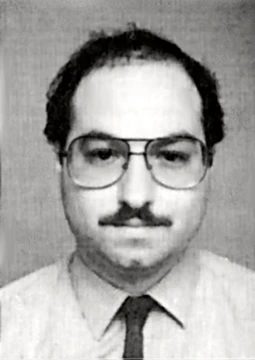
Natwarlal
Indian fraudster who supposedly sold the Taj Mahal and Parliament House.
Natwarlal, born Mithilesh Kumar Srivastava in 1912 in the village of Bangra in Bihar's Siwan district, was an Indian con artist famous for audacious crimes and jailbreaks. He is said to have repeatedly "sold" landmarks like the Taj Mahal, Red Fort, Rashtrapati Bhavan, and Parliament House—properties worth an estimated ₹129 billion ($1.4 billion) today. He is regarded as India's greatest swindler, often compared to Frank Abagnale and Victor Lustig.
His father worked as a station master, and Natwarlal was the elder of two brothers. He discovered his talent for forgery when a neighbor sent him to deposit bank drafts; he forged the neighbor's signature and withdrew 1,000 rupees before fleeing to Calcutta. There, he studied for a bachelor of commerce degree while working as a casual stockbroker and attempting—unsuccessfully—to start a cloth business. The British reportedly demolished his family home in Bangra, though the land remains with his family.
His father's railway job gave him inside knowledge of freight operations, and his commerce degree and stockbroking taught him banking rules. With his forgery skills, he pulled off various cons. Arrested first in 1937 for stealing nine tonnes of iron, he briefly switched tactics: he would visit prostitutes, give them tainted liquor, steal their jewelry and money, then escape. He soon found this too risky and returned to conning.
He is believed to have cheated hundreds of shop owners, jewellers, bankers, and foreigners out of lakhs of rupees, using over fifty aliases. In the 1950s, he swindled Punjab National Bank out of ₹6.5 lakhs through a scheme involving rail freight and rice bags. He forged signatures of famous figures and supposedly tricked industrialists like the Tatas, the Birlas, and Dhirubhai Ambani out of large sums. One legend claims he sold Parliament House to a foreigner, with the members of parliament included. He sometimes posed as a social worker or needy person, but also as a business manager or purchasing officer, often paying victims with fake cheques and demand drafts.
In his home village of Bangra, Natwarlal was seen as a Robin Hood figure, giving his earnings to the poor. His non-violent cons, targeting only the wealthy, made him popular. A resident of Siwan town recalled that his visits drew huge crowds. Once, he hosted a large feast in Bangra, giving ₹100 to each poor villager before disapp
- born
- 1912, Bangra, Siwan district, Bihar, India
- died
- 25 July 2009 (disputed; brother claimed cremation in 1996)
- field
- Fraud
- nationality
- Indian
- known_for
- Selling iconic Indian landmarks; multiple prison escapes; over 50 aliases
Lore & Background
Natwarlal was born Mithilesh Kumar Srivastava in the village of Bangra in the Siwan district of Bihar, the older of two brothers. His father was a station master. He discovered his ability to forge after a neighbor sent him to deposit bank drafts; he forged the neighbor's signature and withdrew 1,000 rupees. Fleeing to Calcutta, he enrolled as a student for a bachelor of commerce degree while working as a casual stock broker, and also tried to set up a cloth business, which failed. His house in Bangra is said to have been demolished by the British, though the land still belongs to his family.
After his first arrest in 1937 for stealing nine tonnes of iron, Natwarlal temporarily changed tactics, visiting prostitutes, giving them tainted liquor, and stealing their jewelry and money. He soon deemed this too dangerous and returned to conning. He duped hundreds of shop owners, jewellers, bankers, and foreigners using over fifty aliases. In the 1950s, he swindled the Punjab National Bank out of ₹6.5 lakhs in a scam involving rail freight and bags of rice. He is said to have cheated industrialists including the Tatas, the Birlas, and Dhirubhai Ambani. A legend states he once 'sold' the Parliament House to a foreigner, including the members of parliament themselves. He often paid victims with fake cheques and demand drafts.
Natwarlal was reportedly a Robin Hood-like figure in Bangra, giving earnings to the less-fortunate. In one instance, he hosted a large feast for the village, giving ₹100 to each poor villager before vanishing. He faced 14 cases of forgery in Bihar alone, sentenced to 113 years in prison. He was arrested nine or ten times but escaped most times, notably in 1957 from Kanpur jail by donning a smuggled police uniform, bribing guards with a suitcase full of newspapers, and walking out the front gate. He is believed to have spent only 20 years in prison. The last arrest was in 1996 at age 84; he escaped again while being transported from Kanpur jail to a hospital, last seen at New Delhi railway station on 24 June 1996.
Reader's Guide
Natwarlal's significance lies in his legendary status as India's greatest con man, whose purported schemes—such as selling the Taj Mahal and Parliament House—have become cultural touchstones. His life blurs fact and myth; many of his exploits are believed to be legends, making it difficult to piece together his actual history. The superintendent of police in Varanasi noted in 1987 that Natwarlal was 'remarkably clever' but doubted claims of his poverty and charity. Despite uncertainty, his legacy endures: in India, con men who pull off smart cons are often called Natwarlal, and many fraudsters cite him as inspiration. The people of Bangra take pride in his origins, and in 2011 planned to erect a statue at the site of his former house. His life has been romanticized in films such as 'Mr. Natwarlal' (1979) and 'Raja Natwarlal' (2014), and a crime television program 'Jurm' aired in 2004. His story raises questions about the line between criminality and folk heroism, and the power of narrative in shaping historical memory.
Did You Know?
- Natwarlal supposedly 'sold' the Taj Mahal, Red Fort, Rashtrapati Bhavan, and Parliament House of India on multiple occasions.
- He escaped from Kanpur jail in 1957 by wearing a smuggled police uniform and bribing guards with a suitcase full of newspapers.
- He was arrested nine or ten times but is believed to have spent only 20 years in prison over his lifetime.
- In 2011, his native village Bangra planned to erect a statue of him at the site of his former house.
More in Figures Of Infamy And Espionage 1-22
Spotted an error? Know more?
This is a living reference — every entry is fact-audited, and reader corrections feed straight into our audit queue. Suggest an edit · See this site's audit record