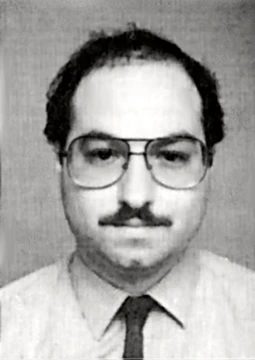
Oleg Penkovsky
Soviet GRU colonel who supplied intelligence to the West.
Oleg Vladimirovich Penkovsky was a Soviet military intelligence officer and colonel in the GRU who supplied intelligence to the United States and the United Kingdom during the early 1960s. He provided extensive information about Soviet military capabilities, including technical details about ballistic missile systems and evidence that the Soviet intercontinental ballistic missile force was less capable than publicly claimed, making him one of the highest-ranking Soviet officials to provide intelligence to the West up to that time.
- born
- 23 April 1919
- died
- 16 May 1963
- field
- Military intelligence
- nationality
- Soviet
- known_for
- Supplying intelligence to the US and UK during the early 1960s, including during the Cuban Missile Crisis
Lore & Background
Penkovsky was born on 23 April 1919; his father was killed fighting as an officer in the White Army during the Russian Civil War. He graduated from the Kiev Artillery Academy, was promoted to lieutenant in 1939, and served in the Winter War and World War II, reaching the rank of lieutenant colonel. In 1944 he was assigned to the headquarters of Colonel-General Sergey Varentsov, who became his patron, and later married the teenage daughter of Lieutenant-General Dmitri Gapanovich. He graduated from the Frunze Military Academy in 1948, joined the GRU in 1953, and served as military attaché in Ankara, Turkey, before being recalled after reporting superiors for breaches of regulations. After studying rocket artillery at the Dzerzhinsky Military Academy, he was suspended from a post in India when the KGB uncovered his father's death, and was assigned in November 1960 to the State Committee for Science and Technology.
Reader's Guide
Penkovsky approached American students in Moscow in July 1960 with an offer to spy for the United States. After initial delays, the CIA contacted MI6, and British salesman Greville Wynne was recruited to communicate with Penkovsky. The first meeting with intelligence officers occurred in London in April 1961, and for 18 months Penkovsky supplied a large volume of information, including documents indicating the Soviet nuclear arsenal was substantially smaller than Nikita Khrushchev claimed and that the Soviets could not yet produce large numbers of ICBMs. During the Cuban Missile Crisis, his material, codenamed IRONBARK, was combined with U-2 photography to identify Soviet missile systems in Cuba and assess their readiness. Penkovsky was arrested on 22 October 1962, tried for treason, and executed on 16 May 1963. A later CIA review in 1978 established that he was not under Soviet control and that his information was genuine and highly valuable, though uncertainty remained over how he was compromised. Former MI5 officer Peter Wright believed Penkovsky may have been a Soviet-controlled agent, noting he did not reveal names of Soviet agents and that provision of original documents was suspicious; other intelligence officers and defectors regarded him as genuine.
Did You Know?
- Penkovsky was codenamed Hero by the CIA and Yoga by MI6.
- He was one of the highest-ranking Soviet officials to provide intelligence to the West up to that time.
- His intelligence was used during the Cuban Missile Crisis to identify Soviet missile systems in Cuba.
- A 1978 CIA review concluded he was not under Soviet control during his work for Western intelligence.
More in Figures Of Infamy And Espionage 1-22
Spotted an error? Know more?
This is a living reference — every entry is fact-audited, and reader corrections feed straight into our audit queue. Suggest an edit · See this site's audit record