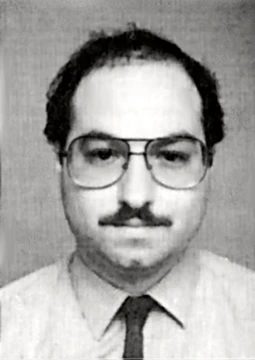
Otto Ohlendorf
SS officer who led Einsatzgruppe D in mass murder.
Otto Ohlendorf was a German SS functionary and Holocaust perpetrator during the Nazi era. An economist by education, he headed the Sicherheitsdienst (SD) Inland, responsible for intelligence and security within Germany, and later commanded Einsatzgruppe D, which perpetrated mass murder in Moldova, south Ukraine, the Crimea, and the North Caucasus. He was tried at the Einsatzgruppen Trial, sentenced to death, and executed by hanging in 1951.
- born
- 4 February 1907
- died
- 7 June 1951
- field
- SS functionary, economist, Holocaust perpetrator
- nationality
- German
- known_for
- Commander of Einsatzgruppe D; mass murder in Ukraine and Crimea
Lore & Background
Otto Ohlendorf was born in Hoheneggelsen into a farming family. He joined the Nazi Party in 1925 and the SS in 1926. He studied economics and law at the University of Leipzig and the University of Göttingen, and by 1930 was already giving lectures at several economic institutions. In 1931 he was awarded a two-semester scholarship to the University of Pavia. According to historian Alan Steinweis, Ohlendorf was one of the few Nazis who possessed two doctoral degrees. In 1933 he obtained a research directorship at the Kiel Institute for the World Economy. He was active in the National Socialist Students' League and taught at the Nazi Party's school in Berlin.
Ohlendorf joined the SD in 1936 and became an economic consultant. By 1939 he had reached the rank of SS-Standartenführer and was appointed head of Amt III (SD-Inland) of the Reich Security Main Office (RSHA), a position he kept until 1945. In June 1941, Reinhard Heydrich appointed Ohlendorf as commander of Einsatzgruppe D, which operated in southern Ukraine and Crimea. Ohlendorf refused twice before his eventual appointment. His unit was responsible for the 13 December 1941 massacre at Simferopol, where at least 14,300 people, mostly Jews, were killed. Over 90,000 murders throughout Ukraine and the Caucasus are attributed to his unit.
Ohlendorf disliked the use of the Genickschuß and preferred to line up victims and fire from a greater distance. He forbade individual actions and instructed his men not to take victims' valuables. Many killing operations were personally overseen by Ohlendorf, who wanted them to be 'military in character and humane under the circumstances.' In 1943, in addition to his other jobs, he became a deputy director-general in the Reich Ministry of Economic Affairs. In November 1944 he was promoted to SS-Gruppenführer.
Reader's Guide
Otto Ohlendorf's significance lies in his dual role as a high-level SS intelligence chief and as a field commander of a mobile killing unit. As head of SD-Inland, he shaped Nazi economic doctrine and collected public-opinion data for the regime. As commander of Einsatzgruppe D, he oversaw the murder of over 90,000 people, primarily Jews, in Ukraine and the Caucasus. His insistence on 'military-style' executions and his refusal to use gas vans as impractical illustrate the bureaucratic and ideological dimensions of the Holocaust. Ohlendorf's trial and execution after the war represent one of the few instances of legal accountability for Einsatzgruppen leaders. His career exemplifies how educated professionals—an economist with two doctorates—could become central to the machinery of genocide. The legacy of Ohlendorf is a stark reminder of the intersection of academic expertise, administrative efficiency, and mass murder under the Nazi regime.
Did You Know?
- Ohlendorf was one of the few Nazis who possessed two doctoral degrees.
- He refused twice before being appointed commander of Einsatzgruppe D.
- Over 90,000 murders throughout Ukraine and the Caucasus are attributed to his unit.
- He complained about Romanian units pillaging and raping during killing operations.
More in Figures Of Infamy And Espionage 1-22
Spotted an error? Know more?
This is a living reference — every entry is fact-audited, and reader corrections feed straight into our audit queue. Suggest an edit · See this site's audit record