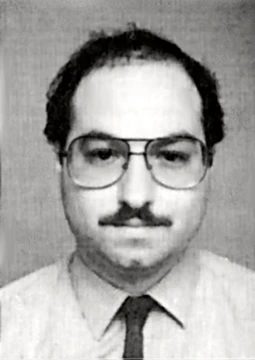
Richard Sorge
Soviet spy who warned of Hitler's attack and Japan's neutrality.
Richard Gustavovich Sorge was a German journalist and Soviet military intelligence officer who operated undercover in Nazi Germany and Japan before and during World War II. He is best known for providing the Soviet Union with critical intelligence about Adolf Hitler's planned attack and, later, that Japan would not attack the Soviet Union in the near future.
- born
- 4 October 1895, Sabunchi, Baku, Russian Empire (now Azerbaijan)
- died
- 7 November 1944, Japan (hanged)
- field
- Espionage, journalism
- nationality
- German (later Soviet citizen)
- known_for
- Informing the Soviets of Hitler's plan to attack the USSR and that Japan would not attack the USSR in 1941
Lore & Background
Sorge was born in 1895 in a suburb of Baku, the youngest of nine children. His German father moved the family to Berlin in 1898. He served in the Imperial German Army during World War I, was wounded twice, and awarded the Iron Cross, Second Class. Disillusioned by the war, he became a communist, studying philosophy and economics at several German universities, and earned a doctorate in political science in 1919. He joined the Communist Party of Germany and worked as an activist.
Recruited by Soviet intelligence, Sorge operated under journalistic cover in Europe and then China, where he gathered intelligence on Nationalist Chinese plans and expanded Soviet networks. In 1933, he was sent to Japan with the codename 'Ramsay'. There, he worked as a German journalist and built a spy ring. In 1940 and 1941, he provided information about Hitler's plan to attack the Soviet Union, and in mid-September 1941, he reported that Japan would not attack the USSR in the near future.
Reader's Guide
Richard Sorge's significance lies in the intelligence he supplied to the Soviet Union at two critical junctures of World War II. His warning about Hitler's planned invasion, though not precisely timed, alerted Soviet leadership to German intentions. More decisively, his report that Japan would not attack the Soviet Union in the near future allowed Stalin to transfer Siberian divisions to defend Moscow against the German advance, a move widely considered pivotal in the Battle of Moscow. Sorge's network was uncovered a month after his last major report; he was arrested, tortured, confessed, and was hanged in 1944. The Soviet Union long denied his role, but posthumously awarded him the title Hero of the Soviet Union in 1964. His legacy is that of a highly effective spy whose work may have altered the course of the war, though the full extent of his impact remains debated among historians.
Did You Know?
- Sorge's codename was 'Ramsay' (Рамза́й).
- He was awarded the Iron Cross, Second Class for bravery in World War I.
- He was posthumously named a Hero of the Soviet Union in 1964.
- He was hanged on 7 November 1944 in Japan.
More in Figures Of Infamy And Espionage 1-22
Spotted an error? Know more?
This is a living reference — every entry is fact-audited, and reader corrections feed straight into our audit queue. Suggest an edit · See this site's audit record